Culture: a ticket to improved mental health and engagement in school?

The Pearson 2023 School Report revealed that teachers expect mental health, attendance and support for students with Special Educational Needs and Disabilities (SEND) to be the biggest barriers to student learning over the next six months.

Teachers say children in school post-covid are less resilient and struggle to work in teams. Mental health and wellbeing have worsened and, even back in the classroom, children are reluctant to speak up and engage.

We know arts and culture can be powerful. Could they also help address these challenges? Findings from our Better Lives Through Culture project suggest they could be just the ticket! According to teachers, the project has improved access, confidence, retrieval of knowledge, teamwork and engagement.

Mental health and learning

“One in six children has poor mental health which impacts learning.”

NHS England

Research shows unprecedented increases in children’s mental health needs from 2017 to 2020. NHS England reported a 48% increase in children with a ‘probable mental disorder’, rising to one in six children.

In The Link Between Pupil Health and Wellbeing and Attainment Public Health England explores how wellbeing affects learning and vice versa:

“Academic success has a strong positive impact on children’s subjective sense of how good they feel their lives are (life satisfaction) and is linked to higher levels of wellbeing in adulthood. In turn, Children’s overall level of wellbeing impacts on their behaviour and engagement in school and their ability to acquire academic competence in the first place.”

Public Health England

Children’s happiness and life satisfaction

Everyone working with children recognises the importance of wellbeing. We want our children to be happy, but the UK is failing badly at this.

The Organisation for Economic Co-operation and Development Child Wellbeing Dashboard shows that 15-year-olds in the UK have the second lowest levels of life satisfaction in the OECD.

The Children’s Society’s 2022 Good Childhood Report shows a decline in children’s happiness over the last 10 years. Among findings, it reveals that 12% of children are unhappy with schools. Even worse, children experiencing disadvantage are far more likely to be unhappy with school than their wealthier peers.

Arts and Culture offer a solution

Arts and Culture offer many solutions to this wave of poor wellbeing. Taking part in arts activities has been shown to lower stress and improve our subjective sense of wellbeing. As such, we knew there was potential to improve children’s wellbeing, and thus their learning outcomes, through arts in schools.

For the Better Lives Through Culture project we worked with teachers to pilot one creative approach to improve children’s experiences of school and learning. The project used arts to develop cross curricular resources and schemes of work, designed in partnership with children.

Children’s confidence and engagement in school increased, along with their sense of agency in their own learning. Teachers saw improvements in retrieval at primary level. SEND students were more able to access the curriculum, share their existing knowledge and take part in whole class learning.

Better Lives Through Culture Project

Better Lives Through Culture ran over the 2022-23 school year. Four artists worked with pupils and teachers to use arts to deliver a co-constructed scheme of work across four schools in Southampton.

At Primary we worked on the PE, Dance, Geography and Science curriculum. At Secondary we looked at History, English and Art.

319 pupils and nine teachers took part in the project to design or augment existing curriculum work using arts to teach other subjects.

Increases in confidence, engagement and teamwork for pupils

The strongest project outcome teachers observed was an increase in their pupil’s confidence and engagement.

“Really boosted their confidence to the point where they were happy to share in front of the class where previously there had been tears when asked for that.”

Banister School Teacher

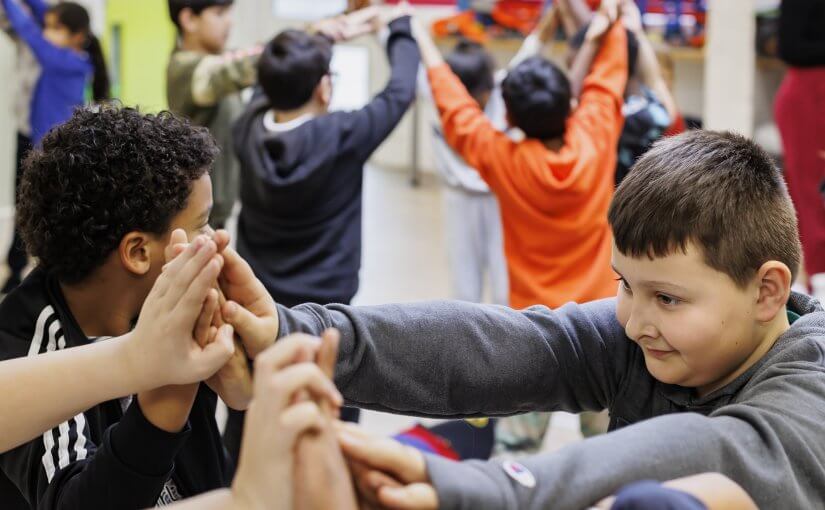
At Primary level, pupils who started the project reluctant to speak up in front of their classmates ended up confidently sharing performances to the whole school. This had a knock on effect in other subjects with more children answering questions in class and contributing generally.

In Secondary school, teachers noticed children’s confidence at speaking in front of each other increased.

Teachers noted that children were not so worried about the risk of not being successful and getting the right answer after taking part in the dance lessons. It was made clear in these lessons that there is not one right answer and refining and progress are as important as the final result.

“There has been a turnaround in the children’s confidence in wanting to have a go, be involved and to share.”

Banister School SLT Teacher

Teachers also noted the creative curriculum work improved teamwork with children getting better at working in small groups. This was something that had particularly suffered due to Covid absence from in person teaching.

Pupil voice increased

At the Secondary Schools, pupils reported that it was important to them to have a voice in designing the curriculum.

We know feeling a sense of agency has an important role in wellbeing. The young people valued the opportunity to make a mark on the school by contributing to the curriculum. The pupils who were in year 7 and 8 previously said they had felt unnoticed within the school. Taking part gave them an increased sense of belonging in the school and made them feel more established and recognised by other pupils and teachers.

At Primary level, the children were excited that their suggestions were listened to. They could see that changes were made to sessions because of their feedback to the dance teacher. The children were also asked to plan and take control of their last dance lesson, which they did showing a good understanding of the task.

Retrieval, and access for SEND students, improved at Primary

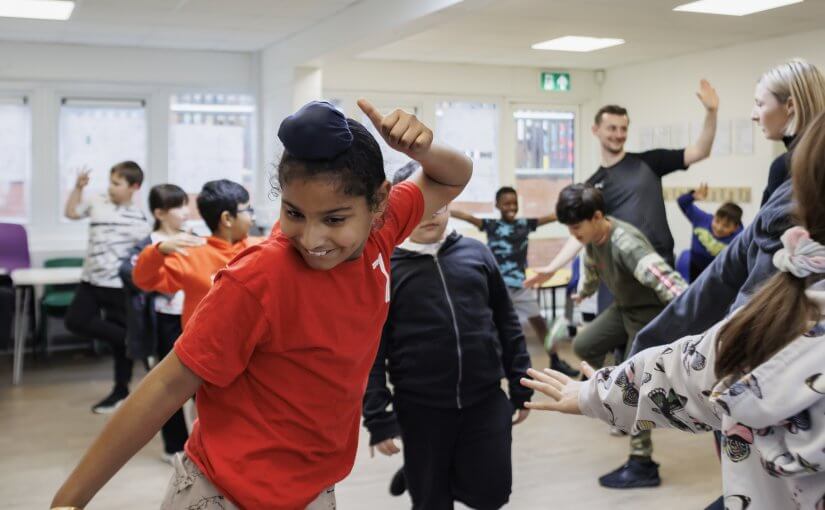
At Banister Primary School, a dance artist worked with teachers across all phases to develop resources for Geography and Science. Teachers were pleasantly surprised to discover their dance project improved retrieval of knowledge and enabled lower achieving pupils including those with SEND (Special Educational Needs and Disabilities) to access activities and learning. Movement rather than writing gave SEND children a route to achieve and be successful.

“I have noticed that it has helped those lower attaining children engage more readily with the more complex vocabulary and has helped them retain this information and retrieve it – particularly when talking about water sources.”

Sarah Golden, Banister School Teacher

One activity used movement to explain the different flows of rivers, for example meandering versus swift. Children were better able to produce the vocabulary at later sessions after moving in a meandering way in the previous lesson.

“The dance movements are hooks for the vocabulary. Children are being able to remember the vocabulary much better. Linking movements to vocabulary is really helping them to secure that language.”

Banister School Teacher

In a Key Stage One science activity about butterflies, teachers said they would previously have started with a written mind map. Working with Natalie, the dance artist, children shared their existing knowledge of butterflies through movement. Children with SEND, who normally would not have been able to contribute words to a mind map, were able to share their knowledge of how butterflies’ wings flutter through movement.

Hope for the future

The Better Lives Through Culture project has demonstrated the powerful role arts and culture can play in addressing current challenges.

Through the Southampton Cultural Education Partnership, we aim to increase opportunities to build young people’s confidence and engagement. Join us to help ensure all children and young people in Southampton have access to cultural education and the incredible benefits it brings.
New Steering Group to champion Cultural Education in Southampton

As we prepare for a new academic year, it’s time to introduce our new Steering Group members.

Following an open recruitment process, we welcome six colleagues who have volunteered to help drive forward Southampton Cultural Education Partnership (SCEP) priorities. With their support, we’re excited about the future of creative education in our city.

Steering group members Matt Brombley, Lynne Dick, Kristianne Drake, Louise Govier, Patrick O'Sullivan and Rosanna Sloan

Joining the Steering Group from September 23

Matt Brombley (He/Him) is Development and Inclusion Manager at Southampton and IOW Music Hubs, as well as Associate Lecturer in Popular and Digital Music at Solent University. He leads the South West Coastal Music Hub’s Youth Voice Network, chairs the South West Music Hubs EDI Working Group, and is a member of Young Southampton.

Lynne Dick (She/Her) is Head of Programme (Engagement and Learning) at John Hansard Gallery, Southampton and is committed to inclusion, diversity and community engagement in and through the arts. She was an artist and artist-educator for many years and has worked across the arts and heritage sectors in the region. 

Kristianne Drake (They/Them) is autistic and non-binary. They are the founder and Director of In Focus Education and Development CIC, which is a small non funded organisation that works with young people who are not in full time education, employment or training, or who are amongst our most at risk and vulnerable.

Louise Govier is Chief Executive of the charity Artswork, which empowers young people through creativity. Based in Southampton, the organisation works with partners across the South to develop new ways for people to discover the success, empowerment and sheer joy that the arts and creativity can bring to classrooms, communities and careers.

Patrick O’Sullivan is Head of Creative Learning at Mayflower and Mast Mayflower Studios. Originally from Tramore, Co. Waterford in Ireland, he has been working in theatre education in the UK since 2004.

Rosanna Sloan is General Manager of The Arts Development Company and founder of Unexpected Places, where she spearheaded many projects including growing the organisation’s Light UP youth theatre to 400 students and establishing Little Lights creative and sensory play classes for under 3s.

They join Kath Page (Chair), Louise Coysh (Observer of our fund hold) and Sam Cairns (SCEP Manager) to make up our Governance team.

The future of SCEP

Our larger Steering Group, who worked with us on our transition planning over 2022-23, steered us to incredible results – achieving Better Lives Through Culture. Transition recommended a smaller Steering Group to support the work of the SCEP and our members.

We had a strong field of SCEP members who volunteered to help run the SCEP. Thank you to everyone who applied. It was a fantastic show of support for the future of SCEP and our plans.

Sam Cairns, SCEP Manager

Over the next two years we will focus on:

  • Increasing Health and Wellbeing for children and young people through arts engagement
  • Pathways and progression: testing out new approaches to conserve capacity and resources including referrals processes
  • Building a workforce for the future: providing inclusive training and skills development opportunities for young people and the cultural sector

Join Us

If you want to help Southampton’s young people create a city worthy of their loyalty and pride, we’d love you to join the SCEP as a member. It’s free and we provide CPD, online and in person network meetings and monthly emails to keep you up to speed with the latest news.

Apply to join the SCEP Steering Group

Are you passionate about how arts and culture can improve children’s lives/outcomes in Southampton? Apply to join Southampton Cultural Education Partnership’s (SCEP) Steering Group and help deliver our priorities. 

We are seeking to recruit members for our volunteer Steering Group who will oversee and drive forward our strategic priorities. 

The Southampton Cultural Education Partnership (SCEP) exists to nurture creative and cultural education for all children and young people in the city. We act as a backbone organisation for the arts and cultural education areas, uniting the education, youth and cultural sectors.

Strategic priorities and outcomes 2023-25

  • Health & Wellbeing for children and young people through arts engagement 
  • Pathways & Progression
  • Building a workforce for the future

The SCEP is seeking to appoint eight members of the Steering Group. Members will be appointed for a two year term and will commit to offering in kind support, which we estimate will between a half to one day a month. 

Application deadline: Tuesday 13 June 2023

To apply, please complete this form: https://forms.office.com/e/TnWZQ4gr4A

For full details, see the application pack below. If you require information in an alternative format or need further assistance, please email scep@soton.ac.uk

‘Rationalising’ your goals

Creative Mentor Jilly Evans brings us the next instalment of our Creative Mentors’ training blog.

Jilly Evans, visual artist, SCEP Creative Mentor

Anna and Matt were unlucky enough to get COVID, so Craig stepped in and taught us all about safeguarding, as always there is so much to learn. Talking about ‘disclosures’ reminded me of knitting/stitching workshops I’d run and how conversation seems to flow more easily when we’re all engaged in creative activity. Whilst all the safeguarding training is vital, I was glad to be reminded that our role is to work on the development of the child.

Craig gave us an example of how a disclosure might happen by playing the part of a young person whose Dad, Mr Pineapple, was clearly not a very nice individual. We had to note down key points from the disclosure, as well as listening. I realised that I also need to make notes to ensure I capture all the relevant information as it’s crucial to have all the facts.

Craig gave us a top tip, some confidential documents such as a contact information form cannot be taken home, they need to be kept securely in a locked container, but your car can be a locked container, who knew!

EPOPS Tag cross stitch by Jilly Evans

The following week Matt and Anna, recovered from COVID, taught us all about coaching, goal setting and active listening. We started the session by sitting, closing our eyes and grounding ourselves in the space. It felt good to sit in the space and become present, to forget about the mad dash that I find myself in every weekday morning to get to work/the studio/ Mentor training anywhere near on time.

We had all been asked to think about a goal or two to share with the group, these included a novel to be written, paintings to be created and studio spaces to be ‘rationalised’ (a fancy word for having a clear out – that was one of mine). In the afternoon we all paired up. Amy and I took turns in being the active listener/coach and the person being coached, swapping roles every few minutes when the timer went off. It felt like we were really getting somewhere and maybe, just maybe my studio may be ‘rationalised’ next year!

Jilly Evans


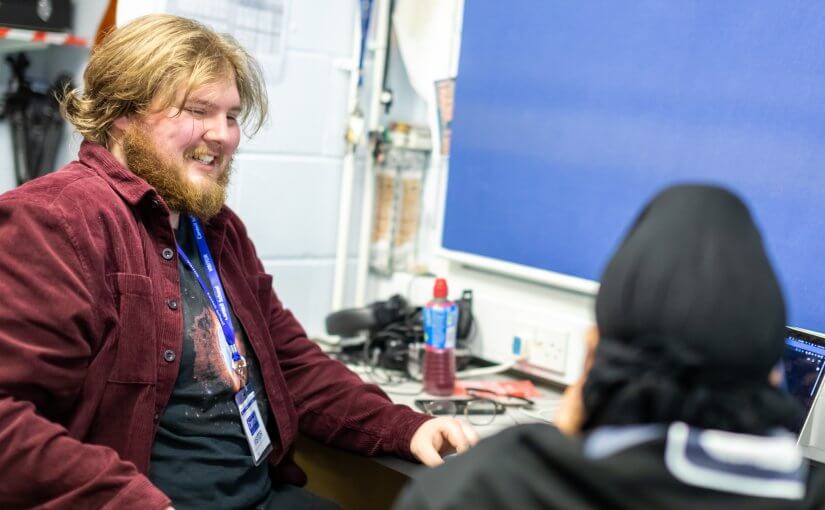
The Southampton Cultural Education Partnership’s (SCEP) objective is to develop a cohort of Creative Mentors as local role models in Southampton, who will work directly with and inspire Children and Young People, including those from at risk, marginalised backgrounds or NEET (not in employment education or training).

Continue reading ‘Rationalising’ your goals

OPPORTUNITY – Closes 14 Dec: Creative Mentoring Opportunity for Young People

Do you work with children and young people? Do you know a young person who would benefit from having a Creative Mentor

10 people gathered together in white room - 6 Creative Mentoring Scheme participants, SCEP Programme Manager and SoCo Music Project trainers.
SCEP Creative Mentors Scheme, Day One, 11 November 2022

SCEP is offering a mentoring opportunity for six young people (aged 11 to 18) with one of our Creative Mentors, as part of the Better Lives Through Culture Programme

  • One-to-one mentoring for young people from our trained Creative Mentors (early career creatives) from Southampton 
  • Fortnightly mentoring sessions (approximately one to two hours) from January to March 2023 
  • Mentors from a range of backgrounds including Photography, Visual Art, Theatre and Drama, Craft, Textiles, Film, Music, Sound Technology, Spoken Word and Poetry     
  • All Mentors DBS Enhance checked
Continue reading OPPORTUNITY – Closes 14 Dec: Creative Mentoring Opportunity for Young People