Lucy Marder (SCEP Lead) provides insight into what an Andy Burnham leadership could look like for cultural education.
With Andy Burnham widely expected to become the UK’s next Prime Minister, many in the education and cultural sectors are considering what this could mean for arts and cultural learning. While it is too early to predict specific policy changes, his record as Mayor of Greater Manchester suggests a strong belief in culture as part of a wider civic agenda, linked to education, wellbeing, skills, regeneration and local identity.
A recurring theme in Burnham’s work has been the redistribution of power away from Whitehall and towards cities and regions. Recent speeches have reinforced his commitment to devolution and greater local control over public services, skills and economic development. For Southampton, this could create opportunities for cultural education to be shaped more strongly through local partnerships between schools, colleges, universities, cultural organisations and local authorities. A more devolved approach may enable places to align cultural learning more closely with local priorities, creative industries and community needs. A potential challenge for Southampton is that, despite significant social and economic inequalities, it is not always perceived as a place requiring the same level of intervention as areas further from London.
Commentators also suggest a Burnham government could place greater emphasis on technical and vocational pathways, stronger links between education and employment, and broader measures of success for young people. This may create new opportunities to position arts and cultural learning as contributing not only to creativity and wellbeing, but also to skills development, employability and economic growth.
For SCEP members, the key question is how cultural education can demonstrate its value within wider agendas around opportunity, enrichment, skills and place-making. If decision-making becomes more locally driven, partnerships in Southampton may have greater scope to influence how arts and culture support young people’s learning and development.
Lucy Marder (SCEP Lead) reflects on the new Department for `Education Enrichment Framework.
The DfE (Department for Education)’s new Enrichment Framework, published in June 2026, is non-statutory guidance designed to help schools and colleges plan and improve enrichment opportunities for all young people. For SCEP members, the framework is particularly significant because it identifies Arts and Culture as a core area of enrichment and places strong emphasis on partnership working, creating new opportunities for collaboration between schools, colleges and cultural organisations.
The framework is structured around eight benchmarks covering areas such as strategic planning, accessibility, partnerships, impact and continuous improvement, encouraging schools to take a more coordinated approach to enrichment.
While the framework does not directly introduce dedicated new funding for arts and cultural activity, it is likely to become an important reference point for schools when planning personal development and enrichment provision. In parallel, through the Enrichment Expansion Programme (part of the National Youth Strategy) the DCMS (Department for Culture, Media & Sport) are procuring a delivery partner who can work across the 9 English regions and whose approach can be flexed to ensure its offer of support to schools includes 400 target schools that will be funded to provide an enhanced enrichment offer.
From 6th – 10th July, the Southampton Cultural Education Partnership (SCEP) presented our second Cultural Collaborative Work Experience Programme. The week hosted 18 Year 10 students from St. George’s School, Cantell School and Oasis Academy, Lordshill.
The students took part in a series of workshops exploring skills necessary for roles in the creative industries. They explored the workplaces of a range of creative organisations in Southampton and met experts in the industry, learning about career paths and the opportunities to take part that are present throughout the city. The project was led by Mayflower, Turner Sims and Southampton & Isle of Wight Music, with workshops delivered by John Hansard Gallery, CityEye and Artswork. A massive thank you to all our members for their contributions: this informative and rewarding week wouldn’t have been possible without you.
Speed-networking activity
Every morning, students were introduced to a creative professional who explained their role and launched a relevant activity. They were visited by a communications assistant, an arts administrator, a programmer and a producer. These dynamic sessions provided an opportunity for the students to ask the facilitators questions about their role and career path, before diving into activities made to simulate working in that role.
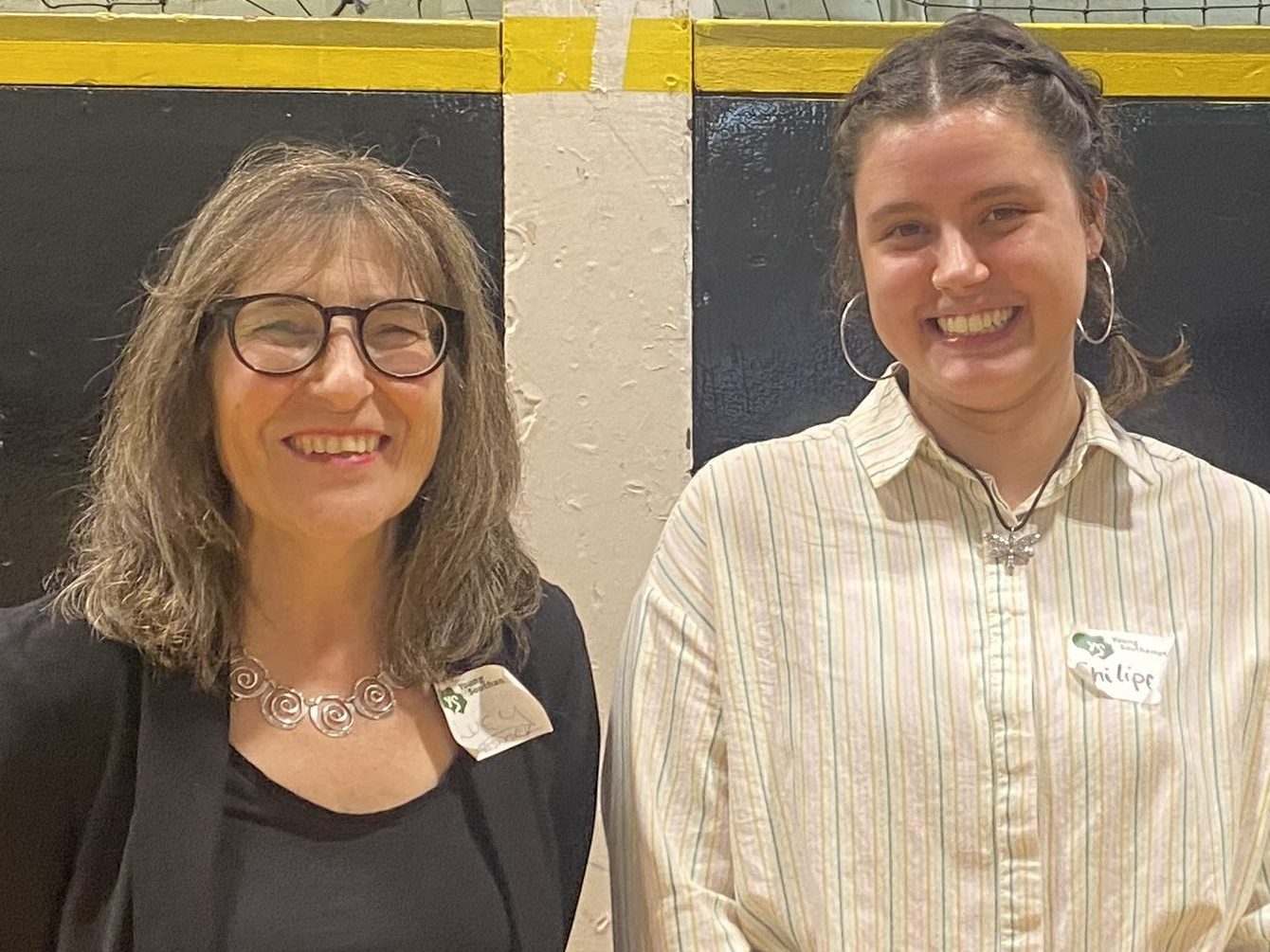
Excitingly, I (Philippa Evans) had the opportunity to lead one of these sessions, so I saw first-hand how the student’s confidence grew. On Tuesday morning, I spoke to the group about my work as Communications Assistant. I introduced them to the role and my own personal journey, sharing my perspective of the creative industry in Southampton.
After this, we spent some time producing content about the work experience week –these videos were planned, filmed, acted and edited entirely by young people and can be watched below on the SCEP YouTube channel. Excitingly, throughout the week the students experienced similar workshops from 3 other creative professionals, shining a light on a variety of roles within the creative industries.
On Tuesday afternoon, the students visited John Hansard Gallery where they had the choice between designing an art gallery or using professional cameras to film a video with City Eye.
John Hansard Gallery gave the student’s a private tour of Simeon Barclay’s Farewell Sweet Innocence exhibition, before giving them the chance to design their own exhibition space using clay, paper and magazines.
Whereas City Eye taught the students about the variety of job roles within the film industry and, with a brief lesson on shot types, the students were handed cameras to film their own short story. These creative activities introduced the students to collaborative work and problem-solving, whilst experiencing practical, creative activities.
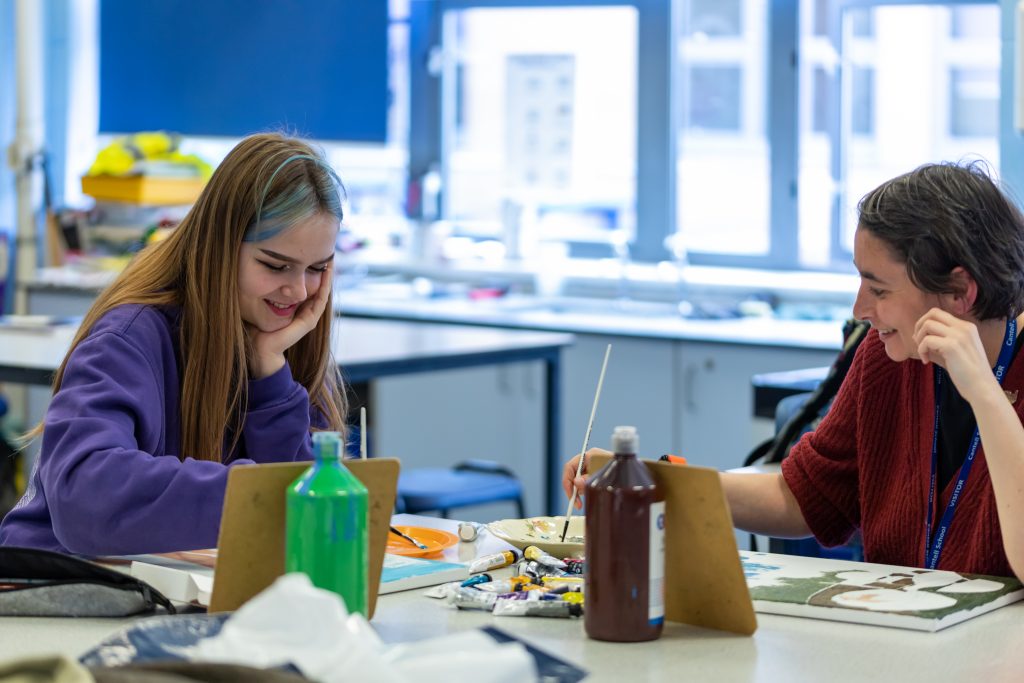
On Wednesday, the students had an afternoon session ran by Artswork. Over the course of two and a half hours, participants had the opportunity to take part in career-focused discussions, interspersed with fun, creative activities. The students were very engaged and active in thinking and sharing about their own futures. During the discussions about future job roles, it was encouraging to see some of the young people taking on and sharing their learning from earlier in the week – for example, new insights about filmsets, using talking points from Tuesday’s session with City Eye. See below photos of some of the creative activities that took place: there was a Taskmaster-inspired task, a chance to design a costume and a watercolour workshop.
For Thursday’s activity, the students met an Assistant Producer from Turner Sims – here he started as a Young Producer on live music events. During this session, the students were challenged to produce a festival using randomised slips of paper representing an artform, an audience and a venue. During the process, students were challenged to consider the challenges and opportunities cropping up from their concept: one group had a lot to consider as they planned a dance event inside a library!
By Friday, the students were preparing for their showcase. Here, they were encouraged to be creative with their presentations – no Death By PowerPoint! -and so we enjoyed some short acting skits, interactivity and two short films. The students used humour and imagination to demonstrate their learning throughout the week. From acting as zombies working a 9-5 office job, to funny bloopers and the message to “work hard and stay humble” we were thoroughly entertained.
It was interesting to hear how working in mixed-school teams throughout the week had broadened students’ perspectives, fostered new connections, and developed communication, collaboration, and problem-solving skills.
My personal favourite moment, however, was when one student said they’d learned lots from my session, enjoyed it and might consider communications in their career! Another student said, “I’ve learned creativity, critical thinking and many other skills for my future.” whilst another shared, “Turns out there’s way more behind the scenes [roles] and that was very interesting for me.” It’s been a pleasure to be one of the many people and organisations using this week to educate students about creative careers.
Finally, we were excited to invite our members to network with the students after the showcase. A speed-networking circle was set-up for the students and arts professionals to interact. This was a wonderful opportunity to see how the students have grown since the start of the week, as they asked insightful questions and showed genuine curiosity about different creative careers.
Appreciation to Mayflower, Turner Sims, Southampton & Isle of Wight Music, John Hansard Gallery, CityEye, ArtfulScribe and Artswork for delivering such a rewarding and impactful week.
On Tuesday 23 June 2026, Lucy Marder and I (Philippa Evans) attended Cantell School’s Careers Fair. Despite the hot weather, we were met with 1000 young people, eager to learn about creative careers. The event reached students from Year 7 to Year 10, demonstrating to us the importance of educating young people of all ages about the benefits of pursuing a creative career.
As usual, we presented our members’ offerings to students and used the student’s interests as a jumping off point to discuss creative careers, and creativity within careers. We gathered 150 young people’s answers to the question,
‘What will you create in your career?’
Which sparked several informative discussions surrounding careers in the design of sailboats, architecture and music. One young person was excited to create spreadsheets, and another had the ambition to create a name for themself.
Thanks for having us, Cantell! We look forward to the next career event.
Be visible – new directory linking culture and education in Southampton
We’re creating a new SCEP Cultural Education Directory – designed to help your work be more visible to schools, youth services and alternative provision across Southampton.
The format of the directory has been shaped through our dialogue with the Southampton Education Forum (SEF). They’ve told us what decision-makers in schools and other settings need to know, in order to commission services from arts partners.
Why take part?
This is about making sure your offer can be seen, understood, and commissioned by the people who need it.
The directory will help:
Schools, colleges, youth settings and PRUs find you more easily
Partners quickly understand what you offer and who you work with
Open up more opportunities to deliver your work with young people
This is an important step in strengthening connections between Southampton’s cultural sector and the full range of settings supporting children and young people – particularly those with the least access to cultural opportunities.
Key practical information that commissioners look for
The directory questions reflect what partners have told us they need in order to move from interest to booking and delivery. The aim is to increase your chances of being approached and commissioned.
Your support needs
We know that not all arts organisations or freelancers will have everything in place yet. So there’s a question about the support SCEP members need to build readiness to work with a wider range of young people and settings. Your response to the ‘support needs’ section will not be published in the directory. We’ll use it to inform our member support offer.