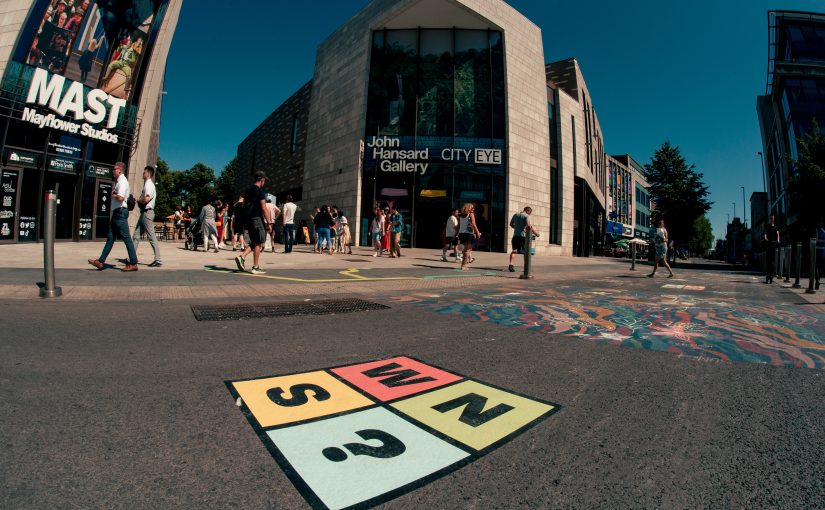
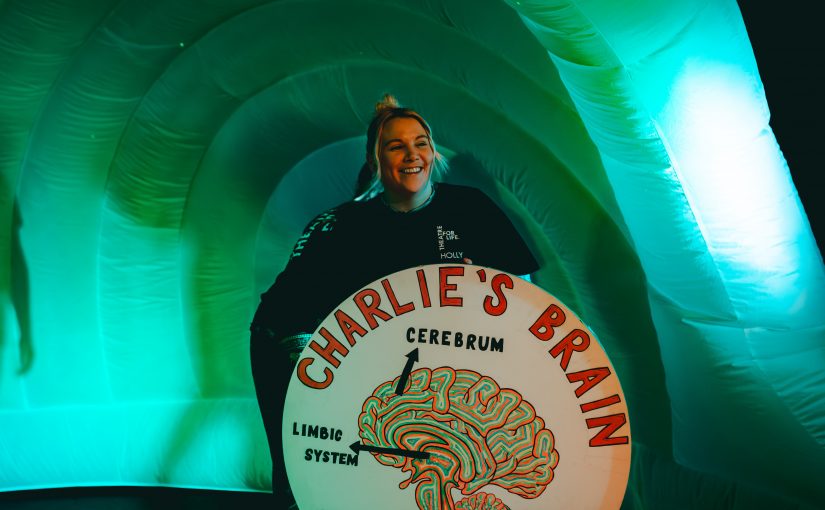
Join Southampton Cultural Education Partnership (SCEP) for an evening of networking and celebration at John Hansard Gallery on Monday 11 March, 17.30-19.00.
We are delighted to host the Connecting Culture Project and the young Cultural Connectors as they launch the Young Peopleâs Manifesto for Culture and Creativity in Southampton. Connect with arts and cultural organisations and meet SCEP members who will be sharing examples of activities and resources available for children, young people, and schools in Southampton.
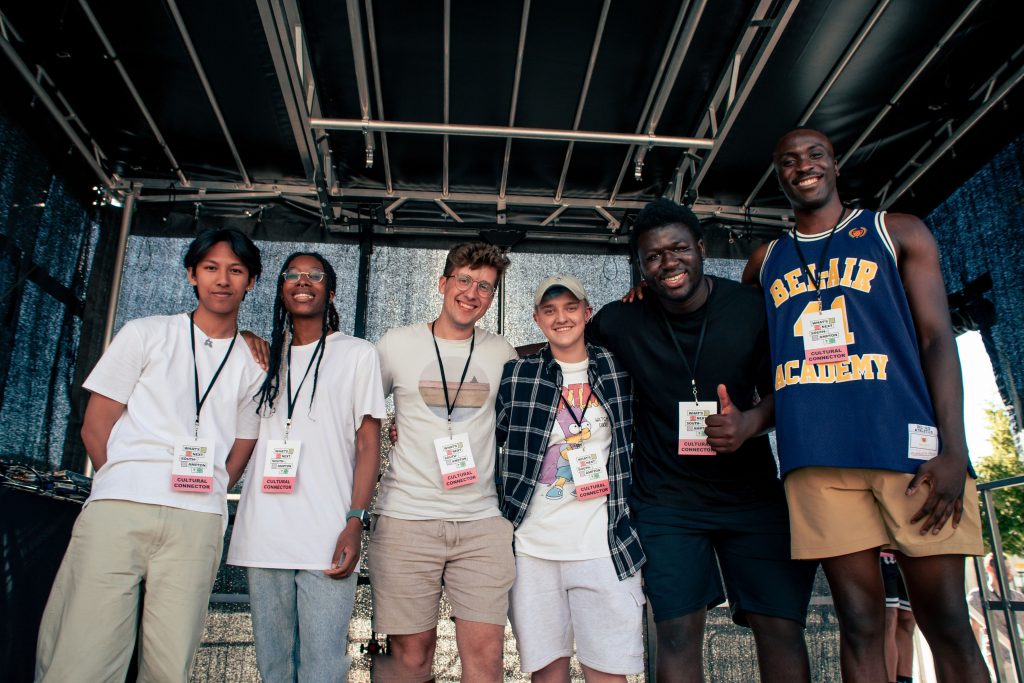
Cultural Connectors at What’s Next Southampton? Credit: @devplacephotos
Directions to John Hansard Gallery can be foundhere. If you’d like to attend, please RSVP below.
Ellie Grant is the University of Southampton’s new Arts and Culture Coordinator. Ellie joined the university in July 2022 and initially worked within the Widening Participation and Social Mobility Directorate. Prior to this, she supported students as the President of Arts University Bournemouth Students’ Union.
Itâs no secret that young people can provide amazing insights into a variety of issues and offer solutions that nobody else has considered. However, understanding how to engage young people in decision-making can be challenging for organisations exploring youth governance for the first time. Luckily, there are a variety of sectors we can look to for inspiration, and, for this blog, Iâll be reflecting on the lessons I learnt from my time working in Widening Participation.
Prior to joining the Arts and Culture team this January, I worked in the Widening Participation and Social Mobility Directorate at the University of Southampton. I supported a number of students as part of the universityâs flagship social mobility programme, Ignite Your Success, and it was during this time that I developed an understanding of the importance of youth governance. While there are many elements of youth governance and leadership that I could discuss in this blog, Iâve selected four key lessons that I believe can be applied to cultural education.
Embed co-design at every stage
Whether youâre developing a project or a policy, one of the best ways to capture the youth voice is to embed co-design into every stage of your workstream. In my previous role, I was lucky enough to have access to a Student Advisory Board, a group of students from a variety of backgrounds who were consulted on different projects. These students helped to identify potential pitfalls in our proposals and worked with us to find creative solutions.
“For co-design to really work, the young people involved in a project should feel that they are making a tangible contribution to its objectives and outcomes.”
Not every organisation will have the resources to set up a youth consultation board, but luckily, co-design can take many different forms. Depending on the scale of the project, it may be more suitable to hire an intern or work with an elected representative. In any case, for co-design to really work, the young people involved in a project should feel that they are making a tangible contribution to its objectives and outcomes.
Support and encourage youth-led activity
Giving young people the tools they need to create and lead their own activities can often result in more successful outcomes. In Ignite, we facilitated this by forming a student social committee. As staff, we provided administrative support in the form of processing bookings and payments, but the students themselves were responsible for planning, promoting, and delivering the events. Not only did these events have better levels of attendance and enjoyment, but the students on the committee developed teamworking and leadership skills.
While the level of independence will vary depending on the ages and circumstances of the people weâre working with, good youth governance asks us to consider what support young people need in order to run their own projects or create new policies. This might include access to meeting spaces, specialist equipment, training, or funding. Even things that we might take for granted, such as transport to meetings, should be considered.
Empower leadership in all its forms
[We will ensure] All children and young people have a voice, are listened to and can influence the services they receive.
Southampton City Council, Children and Young Peoples Strategy 2022-2027
Joining panels or running activities won’t appeal to all young people but that doesnât mean they canât be leaders. Itâs important that we find ways to empower leadership for those who areâfor a variety of reasons including lack of confidence or lack of trustâless able to participate in traditional forms of youth governance. There are still insights to be gained by encouraging these individuals to participate in things like small group work or classroom discussions and then building towards more challenging activities such as peer mentoring or reverse mentoring.
Reach out to those who are ‘hard to reach’
Similarly to my previous point, my final key message is about the importance of trying to work with young people who are less engaged. Typically, the same students who sit on the board for their youth club are also school council members and scout leaders and activists and so on, and this often means that the voices we hear in these spaces arenât always diverse. We then miss the thoughts and opinions of those who opt out of these opportunities to co-design and share.
In both my Widening Participation and Student Voice work, I found that it was often those who weren’t as engaged who offered the most valuable insights into a project. In many cases, these are the young people who face additional barriers in life and whose needs are often neglected by traditional youth spaces. Learning from these individuals is often the key to ensuring a project or policy works for all the young people you want to support. Naturally, there isnât a one size fits all approach to reaching these young people, but trying to understand their circumstances and meet them on their level is a good place to start.
If we want equity baked into our education system, ensuring children with Special Educational Needs and Disabilities (SEND) thrive is a vital goal.
The former Children’s Commissioner Anne Longfield told The Times Education Commission in 2022 that “The talents of hundreds of thousands of children are being squandered”, including those of children with SEND.
Cultural Education provides an inspiring and engaging way to support students with SEND to access a mainstream curriculum and demonstrate their knowledge and skills.
Promising results for SEND students
Our Better Lives Through Culture project, which worked with four schools across Southampton in 2023, found using the arts enabled:
Primary SEND students to demonstrate their knowledge and fully take part in lessons
Secondary students in Alternative Provision to build confidence, communication and teamwork skills while engaging in school work
Support for children with SEND
For children with SEND the current school wide issues of poor student mental health and attendance are severe.
In the Pearson 2023 School Report, teachers reported that support for students with SEND is expected to be one of the biggest barriers to learning over the next six months. Delays to Education, Health and Care Plans (EHCP), and lack of funding for specialist support are reported by schools across the region.
Using dance to demonstrate knowledge
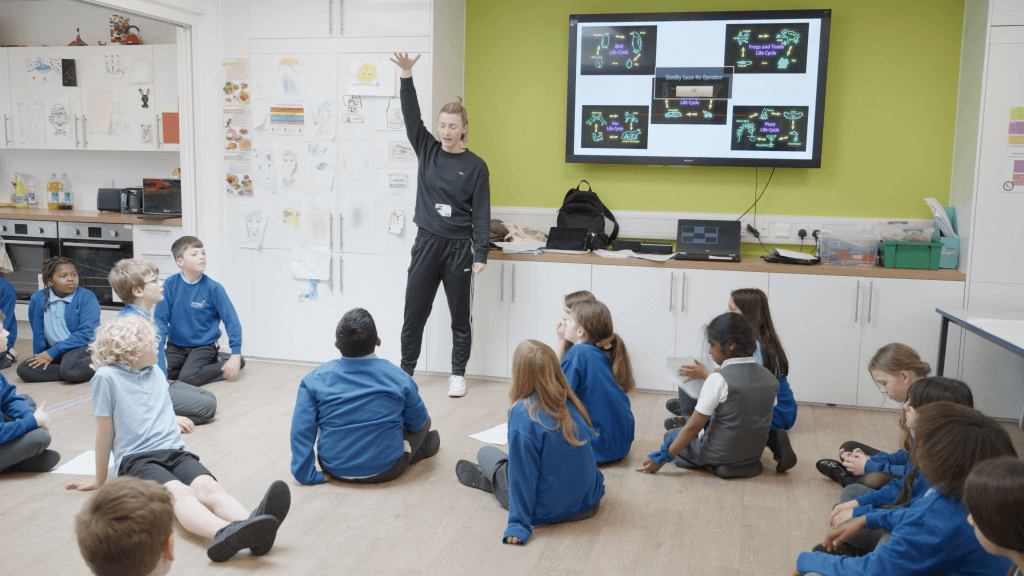
One way to support students with SEND is to use arts and culture across the curriculum. Working with Banister Primary School, movement specialist Natalie Watson used dance to deliver parts of the Geography and Science curriculum.
When studying Butterflies in Science in Year 2, rather than asking children to create a mind map of what they knew about butterflies Natalie asked the children to move and behave like butterflies. This allowed students with SEND to express their knowledge and have it recorded by the teacher. Using dance increased access to lessons for children with SEND and lower achieving children in Key Stage 1.
Increasing engagement with complex vocabulary
Teachers also noticed that using dance helped lower attaining children engage better with more complex vocabulary. Pupils were able to retain and retrieve the words.
In Geography, children could show the different ways rivers moved and could recall geography vocabulary such as meandering to describe rivers. Classifying animals in science was also more engaging for the children using movement.
Natalie and the school worked together to refine their approach to using Dance. This was then rolled out across Geography at Key Stage 2 and Science in Reception and Key Stage 1 with supporting resources and a lesson plan. INSET training was provided to model how to use the resources with the classes.
Engaging students in Cantell’s Learning to Learn Hub
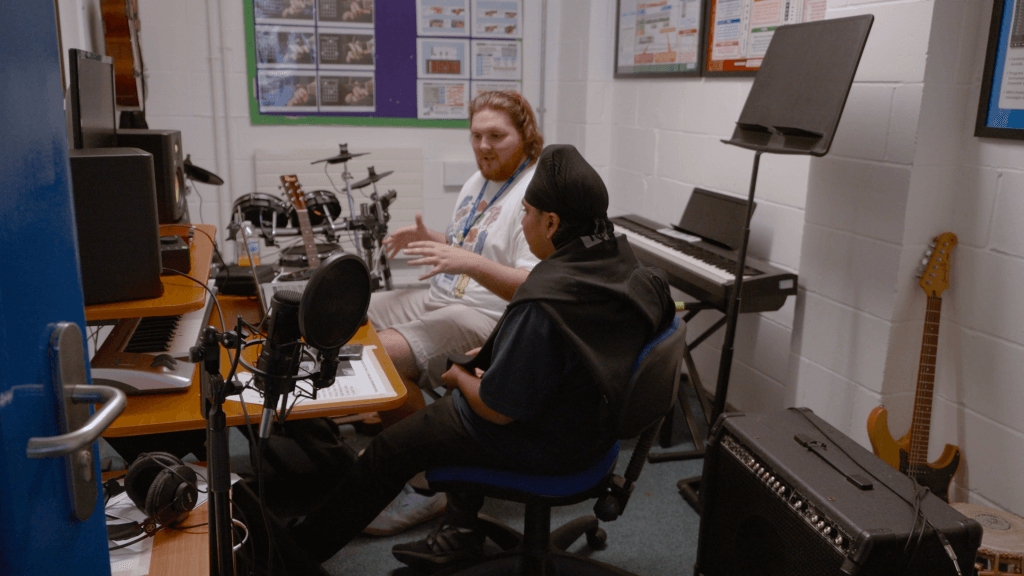
At Cantell School, SoCo Music Project worked with students within the school’s Learning to Learn Hub. Some students wrote song lyrics linked to their English text as part of their Key Stage 4 English Curriculum.
Attendance and engagement are key outcomes needed for the students in the Learning to Learn hub. The students who worked with SoCo’s artist Craig engaged in the project with Craig tailoring activities to the students each week.
Their teacher remarked the approach was very well suited to the learning to learn model. The students responded differently to an artist and respected their expertise. After building trust the students engaged in independent work writing lyrics and worked as a team performing on the drums together.
Working with artists is CPD for teachers
Teachers across all of the Better Lives Through Culture projects reflected that working with artists was a form of CPD for them. They learnt new ways to work and communicate with their students.
For teachers looking for strategies on how to support SEND students within their classrooms cultural learning offers important tools and approaches.
Southampton Cultural Education Partnership (SCEP) members have expertise in working with students with SEND and crafting arts-based interventions.
Join the SCEP to learn more and connect with arts colleagues who can help you support students with SEND.
The Better Lives Through Culture programme launched in 2021, aiming to create better lives for children and young people through culture.
At the time, childrenâs mental health was worsening. Confidence was low and inequalities were widening. We knew arts and culture could help. The need to widen access to cultural education felt urgent so, as a Cultural Education Partnership, we embraced that mission.
Two years on, as concerns over wellbeing continue to grow, the evaluation and film of Better Lives Through Culture offer hope.
Better Lives through Culture Film by City Eye
Better Lives through Culture
Better Lives Through Culture aimed to enable children and young people, who weren’t participating in arts and culture, to access cultural education.
It consisted of a Creative Curriculum project and a Creative Mentors project, both co-designed with young people. The two projects involved 325 children and young people, 40 teachers, 4 artists and 6 early career creatives.
The programme, delivered in partnership with Artswork with Bridge Investment funding from Arts Council England, has delivered âlife-changingâ results.
âMy whole life has changed. I went from working one day a week in an art gallery. Now Iâm working full time in a school that specialises in autism.â
Creative Mentor
Cultural Curriculum
Students worked with local artists to develop Creative Curriculums, offering new ways to learn different subjects.
Banister Primary School explored Geography and Science curriculum through dance and movement. Oasis Academy Lord’s Hill collaborated with a writer to address literacy and oracy within Art and Design. Cantell School added music to the English curriculum, while Woodlands Community College introduced a multi-artform approach to History.
“There has been a turnaround in the children’s confidence in wanting to have a go and be involved and to share.”
Banister School SLT Teacher
Teachers reported increased confidence, engagement and teamwork for all pupils. Learning benefits included improved retrieval for Primary pupils and access to learning for children with Special Educational Needs and Disability (SEND).
“Linking movements to vocabulary is really helping them to secure that language.”
Banister School SLT Teacher
Teachers have learnt new ways to work with their pupils that improve access for students with SEND. Primary age SEND students who normally cannot demonstrate the vocabulary they know through writing have been able to show their knowledge through movement. When studying butterflies, students could flutter like a butterfly or act out a life cycle when they could not write the terms. Teachers reflected it gave them a different way to support the students to be successful.âŻâŻ
“Most importantly, the children are enjoying the sessions. They are excited to be having an input in the planning process and those who are usually reluctant to answer and share are more willing to since these sessions, which is fantastic!”
Banister School Teacher
Creative Mentors
As part of the programme, Early Career Creatives also took part in mentoring training. Equipped with new skills they then mentored young people from Cantell School.
The project nurtured creative talent across the city and helped shape career pathways for mentors and mentees. The young people who were mentored described how the process had helped them improve their knowledge of careers in the arts.
The future
With the number of young people affected by poor mental health predicted to continue rising, galvanising cross-sector expertise to address wellbeing is vital.
Better Lives Through Culture has shown the important role arts and culture can play in building confidence and enjoyment, enhancing learning, and equipping young people with skills for the future.
Southampton Cultural Education Partnership is passionate about continuing to nurture creative and cultural education for all children and young people in the city. We are proud to have worked with so many Southampton students and artists. 135 have achieved Arts Awards in the process.
With your help, there is so much more we can do to achieve better lives through culture.
Thank you to
Our partners and funders: Artswork, Arts Council England, Artsmark, Arts Award, University of Southampton
Artists and Organisations: Abi Thommes and Arts2Educate, Louis Duarte and SoCoMusic Project, Natalie Watson, Susmita Bhattacharya and ArtfulScribe
Schools and Colleges: Banister Primary School, Cantell School, Oasis Academy Lord’s Hill and Woodlands Community College
Creative Mentors: Issa Loyaan Farrah-Kelly, JJ Gale, Jilly Evans, Ellen Gillett, Aidan and Amy Spencer
And all the brilliant young people who took part in Better Lives Through Culture.
Pupils at Banister Primary School have been using movement and dance to look at geography and science from a new perspective.
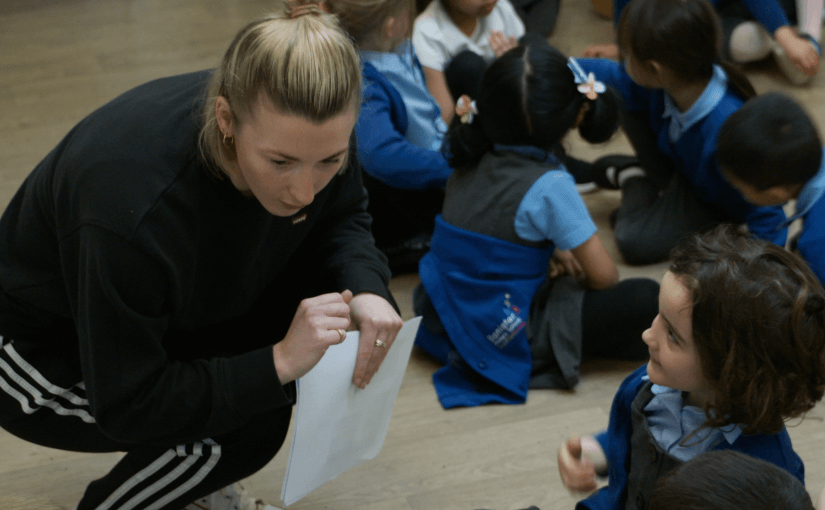
Natalie Watson and Year 4 students at Banister Primary School exploring geography and science using dance and movement. SCEP Cultural Curriculum, part of Better Lives Through Culture. Photographs: Nosa Malcolm
Movement and dance specialist Natalie Watson has been working with the school to devise new ways of teaching geography and science as part of the Southampton Cultural Education Partnership (SCEP) Cultural Curriculum project.
After a term working with the Year 4 classes (together with teachers Miss Golden and Mr Darling) to devise a new scheme of work for geography, the project has been rolled out across different key stages and Natalie has now worked with the Early Years Foundation Stage, Year 2 and Year 5 on their science curriculum.
During an inset day in April, Natalie also ran whole school CPD workshop with the full teaching staff to discover ways to bring dance and movement into their daily lesson planning.
The Cultural Curriculum project is taking place in four different school settings across Southampton with Arts2Educate, SoCo Music Project, ArtfulScribe, as well as dance practitioner Natalie.
Are you a school setting looking to develop Cultural Capital and creative learning in the classroom? Get in touch with scep@soton.ac.uk to explore how we can support your ambitions.
SCEP supported by
Better Lives Through Culture, in partnership with Artswork